A virtual tour of a museum or heritage site: visits without a ticket, an archive for years
A 3D scan captures an interior in full: the room, the exhibition, the architectural details. Visitors can tour an exhibition online, even after it closes, and explore a heritage site even when going inside is dangerous or impossible.
Where we've already scanned
- Wieliczka Salt Mine - the Antonia passage, the Drozdowice and Michałowice chambers, St. Kinga's Chapel.
- Potocki Palace in Kraków on the Main Market Square.
- Polish Aviation Museum in Kraków.
- Manggha Museum of Japanese Art and Technology - the cinema and conference hall.
- MuFo Museum of Photography in Kraków - conference rooms.
- Stara Zajezdnia (Old Tram Depot) in Kraków - the main hall, brewhouse and restaurant.
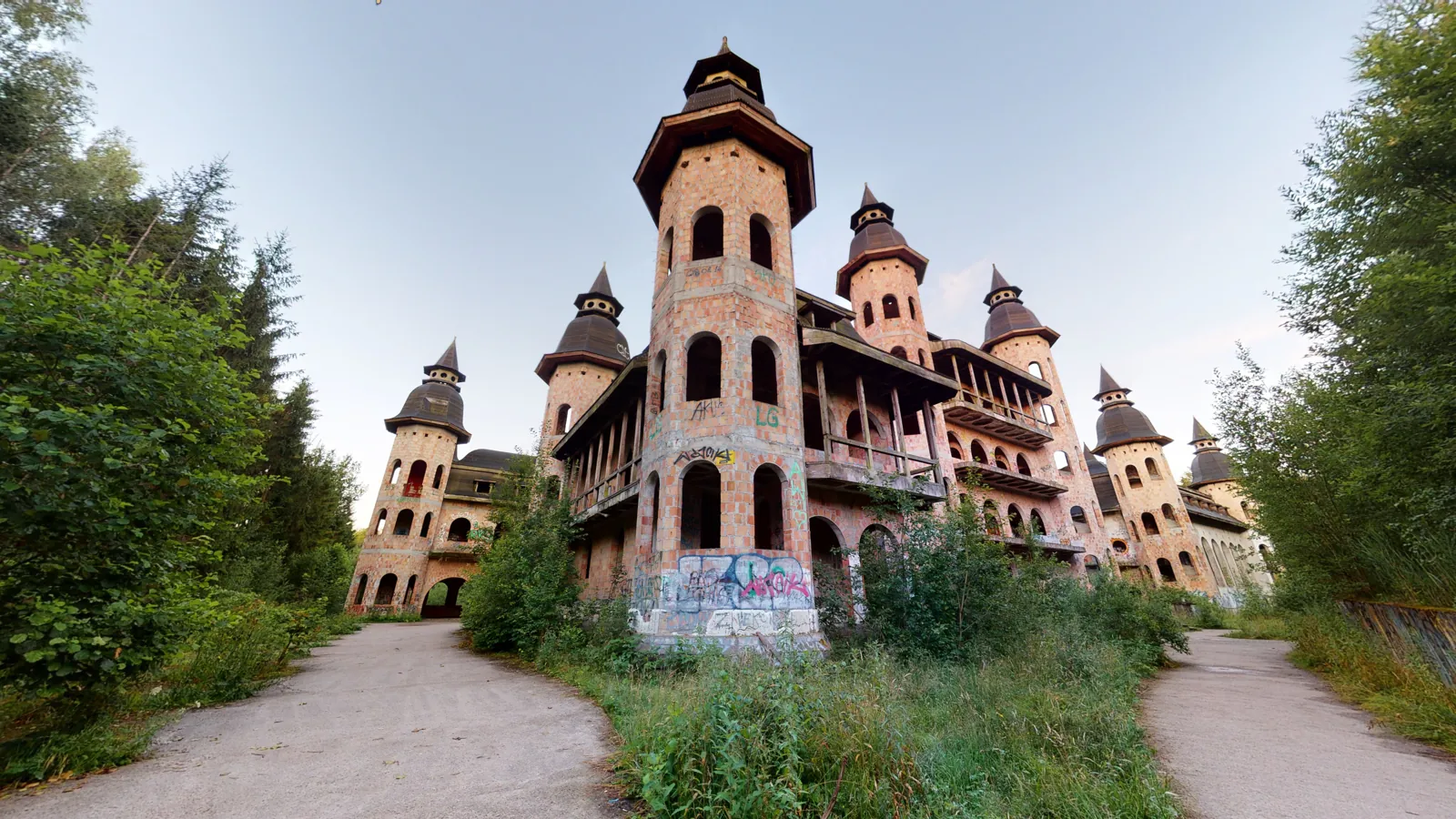
- Łapalice Castle - an unfinished castle with twelve towers and over 5,000 m² of walls and staircases.
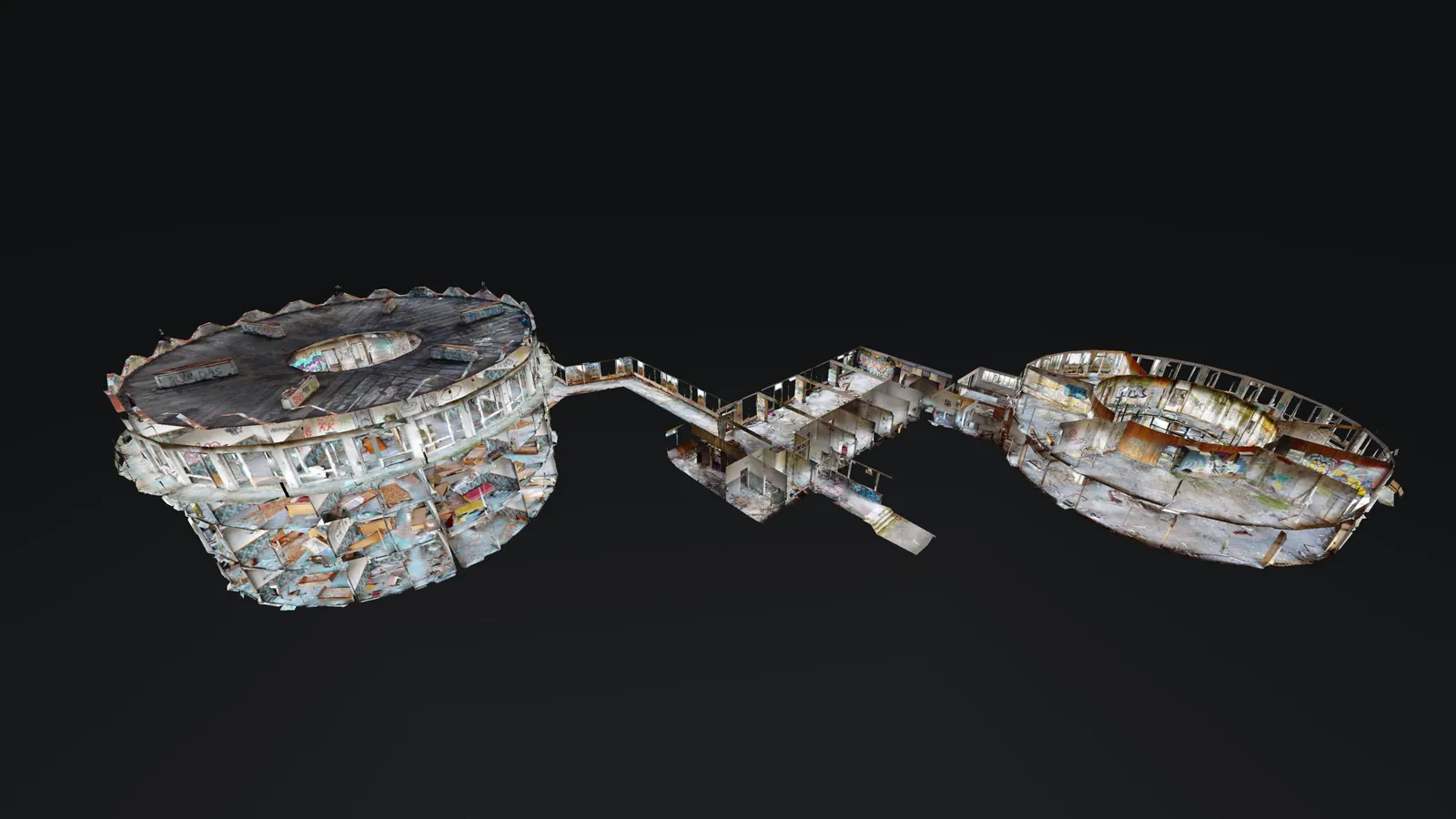
- The Okrąglaki in Miałkówek - a 1970s resort, a gem of Polish communist-era architecture, captured in a single 3D model.
Why a museum needs a virtual tour
- Exhibitions open to everyone - for people who can't travel, use a wheelchair or live far away. The tour works in the browser, on phones and in VR headsets.
- An archive of temporary exhibitions - once dismantled, the exhibition lives on in the tour. You can return to it in catalogs, press materials and future projects.
- Education - teachers show the interior in class before a field trip or instead of one. Info hotspots in the tour describe exhibits with text, photos, audio and video.
- Promotion and tickets - part of the tour on your website and on Google Maps encourages people to visit, and a button in the tour leads to ticket sales.
Documenting the condition of a heritage site
A 3D model is a precise record of a building's condition on a given day: room layout, dimensions, cracks, damp, details. It helps conservators, designers planning works and owners who need proof of condition before a renovation. At Łapalice, the tour became documentation of the building ahead of plans to complete it as a hotel - and, at the same time, a safe way to explore a structure where going inside risks an accident. More about measurements and documentation: 3D scanning.
How we scan without closing the museum
- We agree on the scope: which rooms, in what order, and what goes into the info hotspots.
- We scan before opening, after closing or on a day without visitors. We don't touch the exhibits, and the equipment stays on a tripod.
- Anyone who ends up in the frame is blurred before publication.
- We deliver the tour with a floor plan, a 3D model and panoramas - ready to embed on your website and publish on Google Maps.
How much a museum tour costs
A small gallery or a room up to 200 m² - price in our price list - including a 3D model, an embed code for your website and publication on Google Maps. Museums with many rooms, castles, mines and outdoor sites are priced individually once the scope is agreed. We work throughout Poland, and in and around Łódź, travel within 30 km of Brzeziny is included.
Museum tours - questions and answers
Is scanning safe for the exhibits?
Yes. The scanner stands on a tripod, we don't touch the exhibits and we don't use flash. We usually work with the exhibition lighting, just as it is during visiting hours.
Won't a virtual tour reduce the number of visitors?
The tour shows what awaits on site, but it can't replace seeing the exhibits in person - it works like a preview and encourages people to visit. If you prefer, we can show some rooms only in part.
Can we add exhibit descriptions and audio recordings?
Yes. Info hotspots in the tour can include text, photos, audio recordings and videos.
Do you scan outdoor and underground sites?
Yes. Among others, we've scanned chambers of the Wieliczka Salt Mine and the grounds of Łapalice Castle. We can also show the area around a site from a drone.
How long does it take to scan a museum?
A room up to 200 m² usually takes 2-3 hours. Larger sites are scanned in stages, on dates agreed with the museum.
Open your exhibition to the whole world
Describe the site and the scope. We'll reply with a proposal and a price within 24 hours.